




Diagnosis of stage 2 retinopathy of prematurity (ROP) at an earlier postmenstrual age (PMA) was associated with a greater likelihood that the eye would subsequently require treatment, according to a retrospective study presented at the 59th annual meeting of the Retina Society in Los Angeles.
Nimesh A. Patel, MD, presented the findings on behalf of colleagues from Mass Eye and Ear and Boston Children’s Hospital. The study investigators reviewed 589 eyes from 311 infants diagnosed with stage 2 ROP across 3 quaternary-level neonatal intensive care units in the Greater Boston area. The median gestational age was 25 weeks, and median birth weight was 670 g.
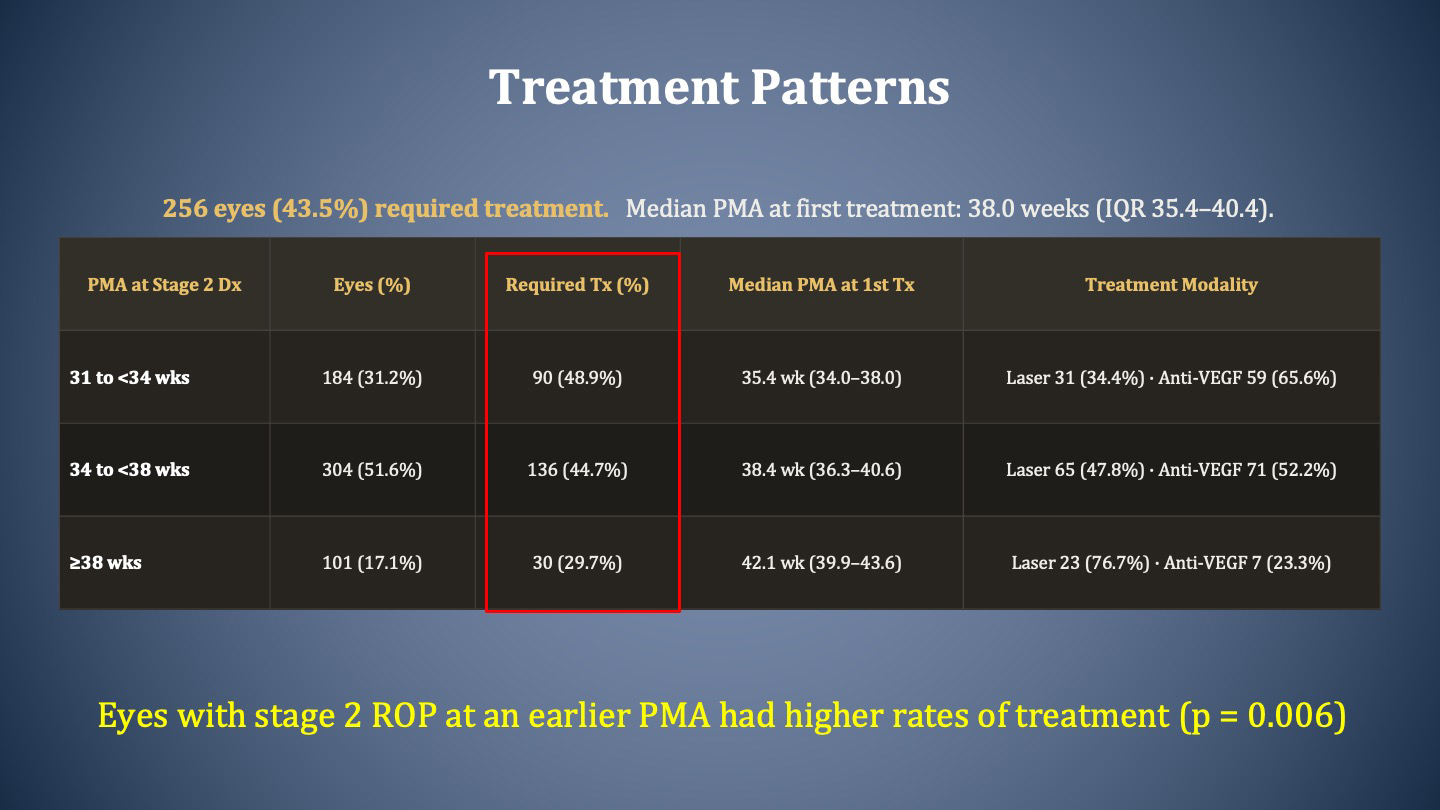
Overall, 256 eyes (43.6%) eventually required treatment for active ROP (Figure 1). Treatment rates differed according to PMA when stage 2 disease was diagnosed. Treatment was required in 48.9% of eyes diagnosed from 31 to <34 weeks PMA, 44.7% of those diagnosed from 34 to <38 weeks, and 29.7% of those diagnosed at ≥38 weeks (P=.009).
Earlier stage 2 diagnosis was also associated with a greater proportion of zone I disease (P<.001), reported Dr. Patel. Among eyes that eventually underwent treatment, median PMA at first treatment was 35.4 weeks in the earliest stage 2 group, compared with 38.4 weeks and 42.4 weeks in the subsequent groups (P<.001).
The investigators also found a high rate of eventual treatment among eyes with type 2 ROP. Approximately 66% ultimately received treatment despite not yet having reached type 1 ROP criteria (Figure 2).
Current treatment decisions are based primarily on stage, zone, and plus disease, Dr. Patel noted, while timing and PMA are not incorporated into treatment criteria. “We really have to be thinking about the timing of disease,” Dr. Patel said.

To illustrate the issue, he showed a case of an infant born at 23 weeks’ gestational age and weighing 600 g who had stage 2, pre-plus ROP in posterior zone II at 33 weeks PMA (Figure 3). After transfer to a community hospital, the disease progressed to stage 3, zone II ROP with plus disease, prompting transfer back to Massachusetts General Hospital and treatment at 36 weeks PMA. The infant subsequently returned for examination under anesthesia and laser treatment of avascular retina at 55 weeks PMA.
The findings do not establish that treating stage 2 or type 2 ROP earlier would improve outcomes. Instead, Dr. Patel said the results raise the question of whether timing should play a greater role in assessing which infants are at high risk of progression.
“Should we be considering treatment earlier than type 1 ROP?” he asked. “I think a lot of us are already doing this, and so it’s important to discuss that a little bit more.” RP
